


| A B C D E F G H I J K L M N O P Q R S T U V W X Y Z # |
Cystic Fibrosis D1152H Mutation Analysis
Test Code15335
CPT Codes
81221
Includes
If amniotic fluid or chorionic villi sampling (CVS) is received, then an additional charge will be added for cell culture work (CPT code(s): 88235) if not already ordered
Preferred Specimen
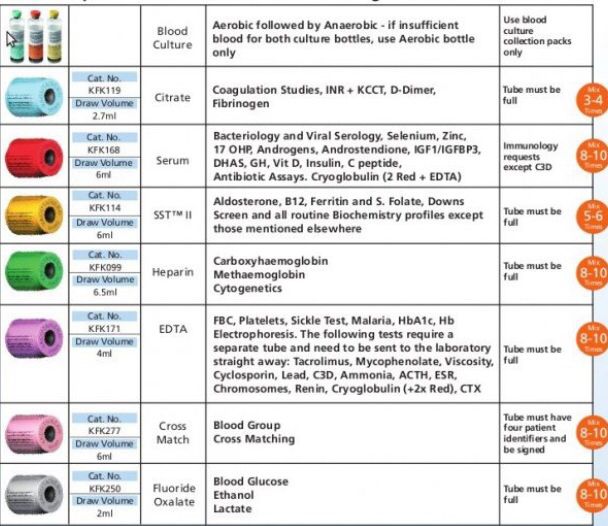
5 mL whole blood collected in an EDTA (lavender-top) tube
Minimum Volume
3 mL whole blood • 10 mL amniotic fluid • 10 mg chorionic villi • 10 mg tissue biopsy
Other Acceptable Specimens
Whole blood collected in: Sodium heparin (green-top) tube or lithium heparin (green-top) tube • ACD (yellow-top) tube • 10 mg tissue biopsy collected in a sterile container • 10 mL amniotic fluid collected in a sterile plastic leak-proof container • 10 mg chorionic villi collected in a sterile tube filled with sterile culture media cultured cells collected in each of two separate sterile T-25 flasks, 75% confluent
Instructions
Do not hold specimen; forward to laboratory when specimen arrives.
Whole blood: Specimen stability is crucial. Store and ship room temperature immediately. Do not freeze.
For fetal testing:
1. Please call 1-866-GENE-INFO (1-866-436-3463) prior to submission.
2. Documentation of parental carrier status must be provided.
3. It is required that Maternal Cell Contamination Study, STR Analysis be ordered in conjunction with fetal testing. A separate tube of maternal blood (EDTA) is required for this test.
Amniotic fluid: Normal collection procedure. Specimen stability is crucial. Store and ship at room temperature immediately. Do not refrigerate or freeze; forward to laboratory when sample arrives.
Amniocyte or chorionic villus (CVS) culture: Two sterile T-25 flasks, 75% confluent, filled with culture medium. Specimen stability is crucial. Store and ship at room temperature immediately. Do not refrigerate or freeze; forward to laboratory when cells arrive.
Dissected chorionic villus (CVS) biopsy: 10-20 mg dissected chorionic villi collected in sterile tube, filled with sterile culture medium. Specimen stability is crucial. Store and ship at room temperature immediately. Do not refrigerate or freeze; forward to laboratory when sample arrives.
Whole blood: Specimen stability is crucial. Store and ship room temperature immediately. Do not freeze.
For fetal testing:
1. Please call 1-866-GENE-INFO (1-866-436-3463) prior to submission.
2. Documentation of parental carrier status must be provided.
3. It is required that Maternal Cell Contamination Study, STR Analysis be ordered in conjunction with fetal testing. A separate tube of maternal blood (EDTA) is required for this test.
Amniotic fluid: Normal collection procedure. Specimen stability is crucial. Store and ship at room temperature immediately. Do not refrigerate or freeze; forward to laboratory when sample arrives.
Amniocyte or chorionic villus (CVS) culture: Two sterile T-25 flasks, 75% confluent, filled with culture medium. Specimen stability is crucial. Store and ship at room temperature immediately. Do not refrigerate or freeze; forward to laboratory when cells arrive.
Dissected chorionic villus (CVS) biopsy: 10-20 mg dissected chorionic villi collected in sterile tube, filled with sterile culture medium. Specimen stability is crucial. Store and ship at room temperature immediately. Do not refrigerate or freeze; forward to laboratory when sample arrives.
Transport Container
EDTA (lavender-top) tube
Transport Temperature
Room temperature
Specimen Stability
Whole blood
Room temperature: 8 days
Refrigerated: 8 days
Frozen: Unacceptable
Amniotic fluid, chorionic villi, cultured cells, tissue biopsy
Room temperature: 48 hours
Refrigerated: Unacceptable
Frozen: Unacceptable
Room temperature: 8 days
Refrigerated: 8 days
Frozen: Unacceptable
Amniotic fluid, chorionic villi, cultured cells, tissue biopsy
Room temperature: 48 hours
Refrigerated: Unacceptable
Frozen: Unacceptable
Reject Criteria (Eg, hemolysis? Lipemia? Thaw/Other?)
Do not reject
Methodology
Polymerase Chain Reaction (PCR) • Single Nucleotide Primer Extension
FDA Status
This test was developed and its analytical performance characteristics have been determined by Quest Diagnostics. It has not been cleared or approved by FDA. This assay has been validated pursuant to the CLIA regulations and is used for clinical purposes.
Setup Schedule
Thurs
Report Available
7-14 days
Clinical Significance
This test detects the D1152H (c.345G>C) variant in the CFTR gene that is primarily present in Ashkenazi-Jewish individuals. It is associated with a wide range of clinical outcomes, from asymptomatic to severe lung disease. It does not look for any other variants in the CFTR gene and is not recommended for routine carrier screening.
The recommended test for routine CF carrier screening analyzes an expanded number of variants that are known to cause CF. If there are questions about which is most appropriate, or if a carrier screening panel that includes CF is desired, please see the Quest Test Directory for panel options and/or contact 866-GENE-INFO (866-436-3463) for assistance.
The recommended test for routine CF carrier screening analyzes an expanded number of variants that are known to cause CF. If there are questions about which is most appropriate, or if a carrier screening panel that includes CF is desired, please see the Quest Test Directory for panel options and/or contact 866-GENE-INFO (866-436-3463) for assistance.
Performing Laboratory
| Quest Diagnostics Nichols Institute-San Juan Capistrano, CA |
| 33608 Ortega Highway |
| San Juan Capistrano, CA 92675-2042 |
Last Updated: November 6, 2024